Technology and regulation
Antitrust Pressure on Big Tech: How Regulators’ Decisions in the US and Europe Are Changing the Business Models of the Largest Tech Companies
For two decades the largest technology companies grew under relatively light regulation. That has changed: in the US and Europe, antitrust authorities have moved from investigations to decisions that directly affect the business models of Alphabet, Apple, Amazon, Meta and Microsoft. This is no longer about fines as a cost of doing business but about requirements to change the very rules by which platforms operate.
Europe: The Digital Markets Act
The European Union has opted for preventive regulation. The Digital Markets Act (DMA) designates the largest platforms as “gatekeepers” and sets a list of mandatory rules for them. In September 2023 Alphabet, Amazon, Apple, ByteDance, Meta and Microsoft received this status, and the obligations took effect in March 2024. Violations can lead to fines of up to 10% of global turnover, rising to 20% for repeat offences.
- Opening up ecosystems. Alternative app stores and payment systems must be allowed.
- No self-preferencing. A platform may not rank its own services above others.
- Choice screens. Users choose their default browser and search engine themselves.
- Control over data. Personal data from different services may be combined only with the user’s consent.
In 2025 the European Commission imposed its first DMA fines: Apple and Meta were fined 500 million and 200 million euros respectively.
The US: A Course Set by the Courts
The American approach relies on litigation. In August 2024 a federal court ruled that Google is a monopolist in general search, pointing to multibillion-dollar payments to partners for default search engine status. The Department of Justice has also sued Apple over restrictions in the iPhone ecosystem and Google over advertising technology, while the Federal Trade Commission is pursuing cases against Meta over its acquisitions of Instagram and WhatsApp, and against Amazon.
How Business Models Are Changing
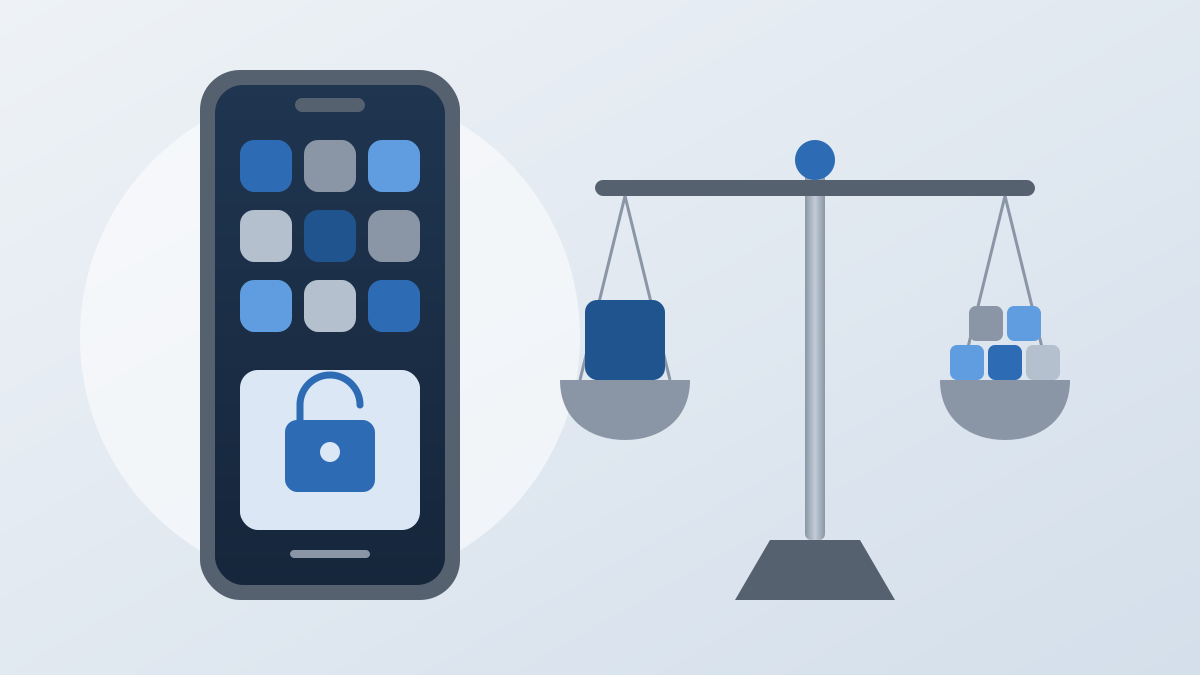
The consequences are already visible. Apple opened iOS to alternative app stores in the EU and revised its commission terms for developers. Meta offered Europeans a choice between an ad-free paid subscription and a free version with personalised ads. Google introduced choice screens and changed how its own services appear in search results. Companies increasingly build regulatory requirements into product design rather than adapting after the fact.
“The era when a platform set the rules for the whole market is coming to an end. Competitive advantage is shifting from control over the ecosystem to product quality and user trust.”
What Comes Next
Pressure on Big Tech is likely to keep growing, especially in artificial intelligence, cloud services and digital advertising. For the market this opens up new opportunities: smaller developers gain access to audiences on fairer terms, and users get more choice.
For the tech giants themselves, the main challenge is keeping up the pace of innovation in a world where transparency and compliance have become a prerequisite for scale. Those who treat the new rules as part of their strategy rather than an obstacle will keep the trust of both users and regulators.